Topographic Embeddings of Pareidolia
And the Theft of the Beholder’s Share
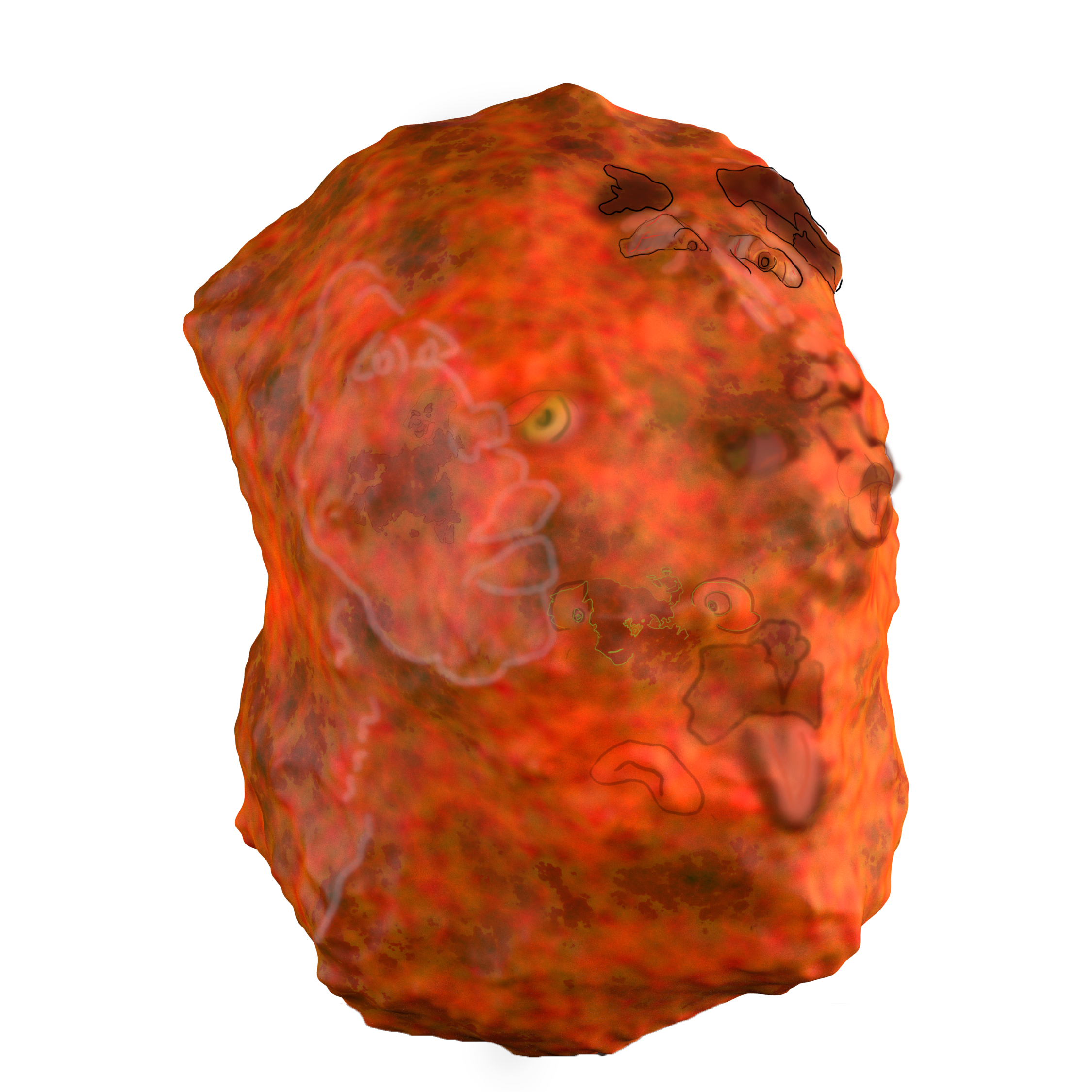
This webpage describes the “TEoP Paintings”, a branch of my practice centered around emergent imagery and the tendency of the mind to elaborate ambiguous stimulus into interpretations— even nonsensical ones— rather than simply leave them unresolved.
Since the compositions are influenced by randomized substrates, the resulting artworks are stylistically inconsistent. Even within a single painting, forms may range from realism to biomorphic abstraction; faces are often cartoonish, distorted, or anatomically implausible.
The figures you will see are derived through pareidolia and should be understood as points within the field of all possible stimuli to which faceness might be attributed by a given observer. In the context of these paintings, “possible stimuli” is restricted by the shapes derivable from the scanned paper’s topography.
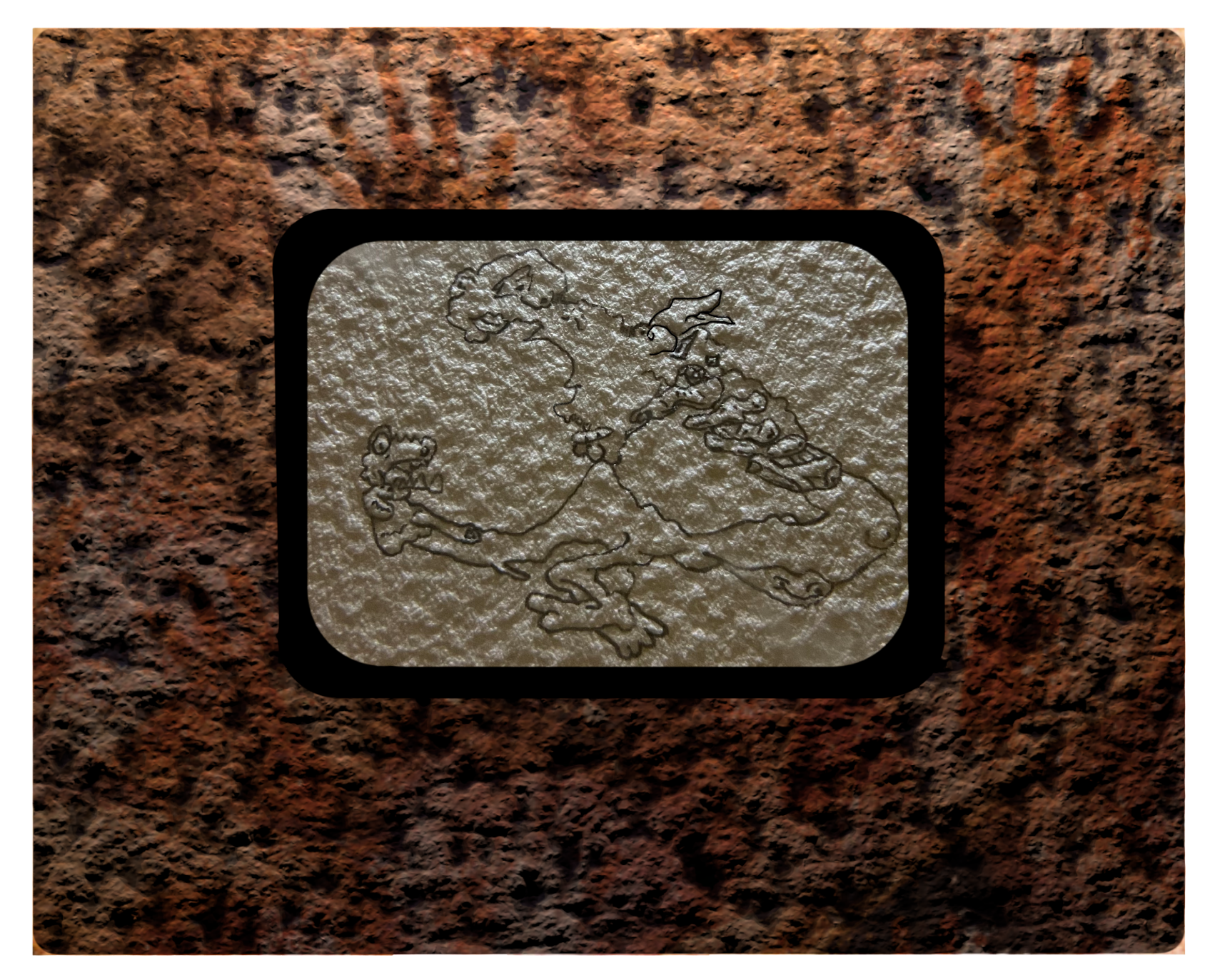
The TEoP paintings are produced using similar methods observed in the prehistoric parietal cave painters who drew latent figures into the contours of rock formations. Since ambiguity contains no inevitable image, the act of stimulus resolution can be divergent; prehistoric and contemporary observers organize the same kind of visual cues into different aesthetics according to their distinct conception of the world and relationship of form. What persists across the historical distance is the act— the production of a meaningful image through the phenomenological intermingling of surface and perception. Although you will see that the treatment of the figure has changed, this fundamental continuity positions the TEoP Paintings as a contemporary re-articulation of the original instinct towards art making.
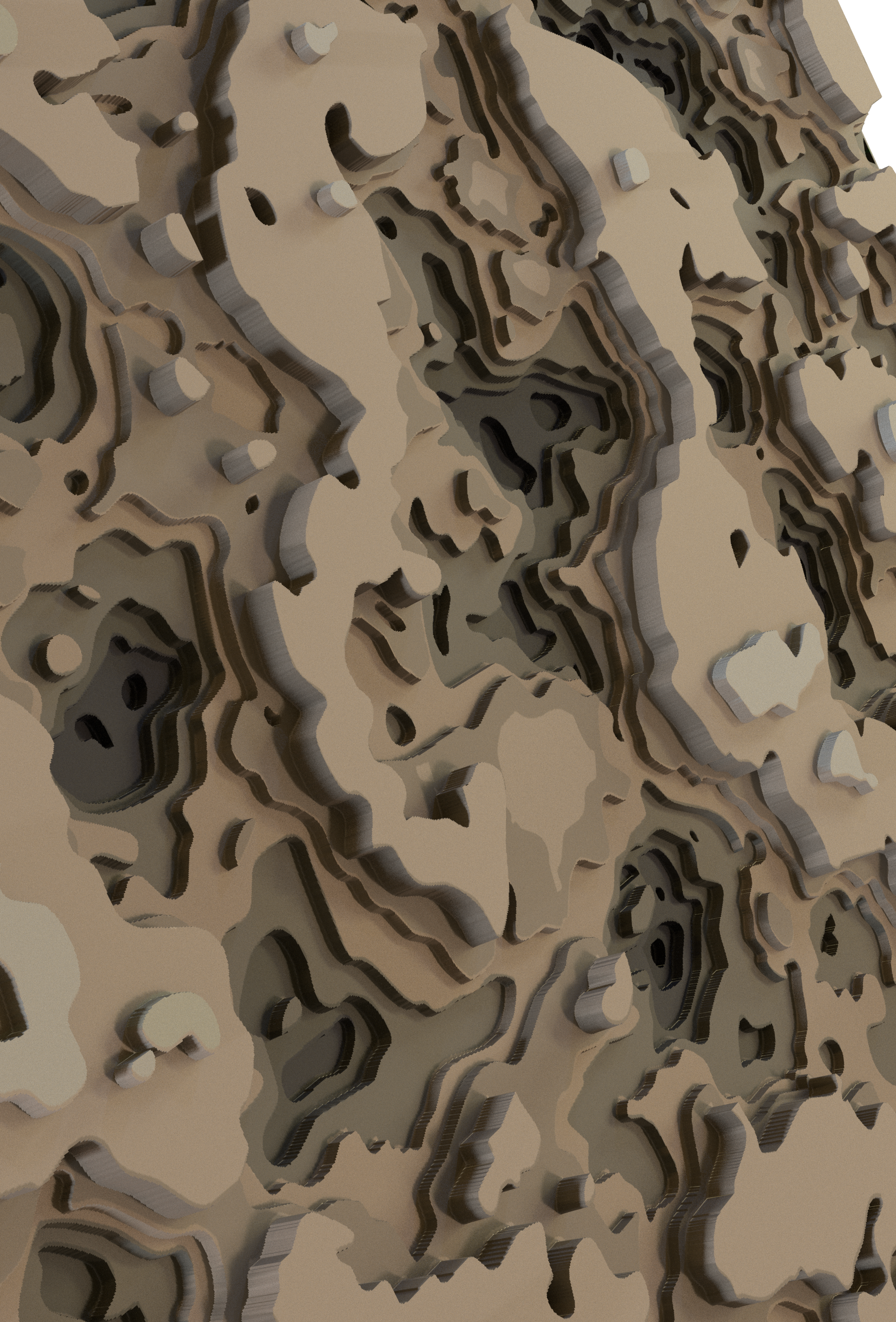
A textured sheet of rough grain paper is angled so that light rakes across its surface. The texture is wave-like, with crests and troughs. The sides of the crests closest to the light source are highlighted, while the opposite troughs are cast in shadow. This arrangement creates a random, and non-repetitive pattern of light and dark regions.
Similar to the clouds we search for recognizable shapes, this texture has the tendency to elicit illusive imagery. However, unlike clouds, the paper remains still and within reach. Under magnification, pareidolic faces are traced within the shadowed grooves of the paper.
Before the artist’s observation, there is no face; and yet, since the drawing corresponds precisely to the physical geometry of the paper, it cannot have been derived by the mind alone.
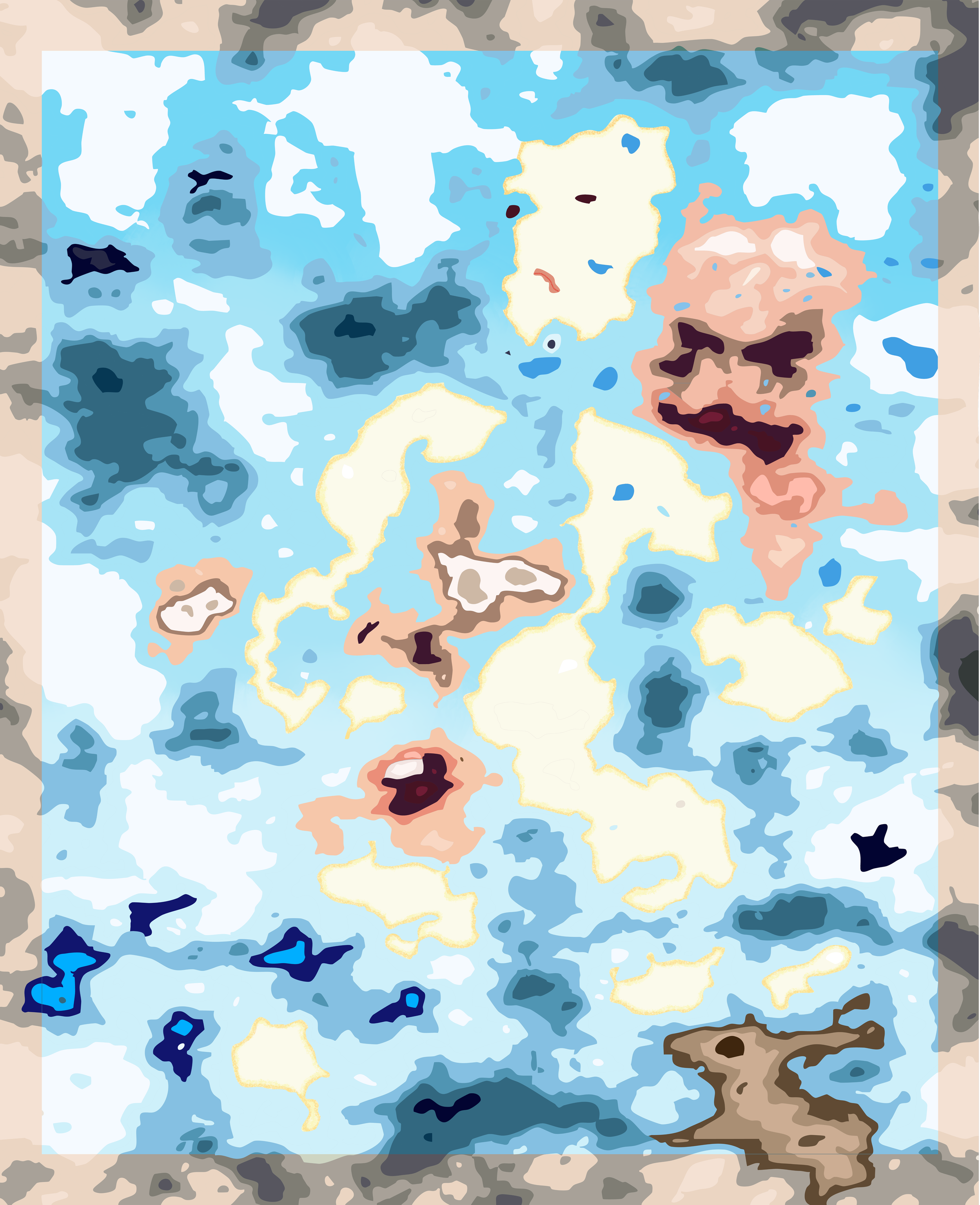
Rendering of Slab Two, “Cloudscape” alternating between the Original Stimulus and the Phenomenal Interpretation.
In production, machined from Algonquin Limestone.
With some additional steps, a more sophisticated pattern can be pulled from the paper.
An optical profilometer produces an accurate 3D model of the paper surface. This data is segmented into several depth ranges, and each is assigned a unique colour. The Z-Axis positions of data points are clamped to the highest value of their respective color range, producing a stepped surface. These coloured steps directly reference the geometry of the paper, while remaining stable at any scale and under any lighting conditions. The model is CNC machined, maintaining the original data.
Ultimately, faces and other phenomena can be identified and expressed simply by changing the colour of each shape.
In doing so, the spontaneous and private experience of the mind is externalized, and made available to be shared with others.
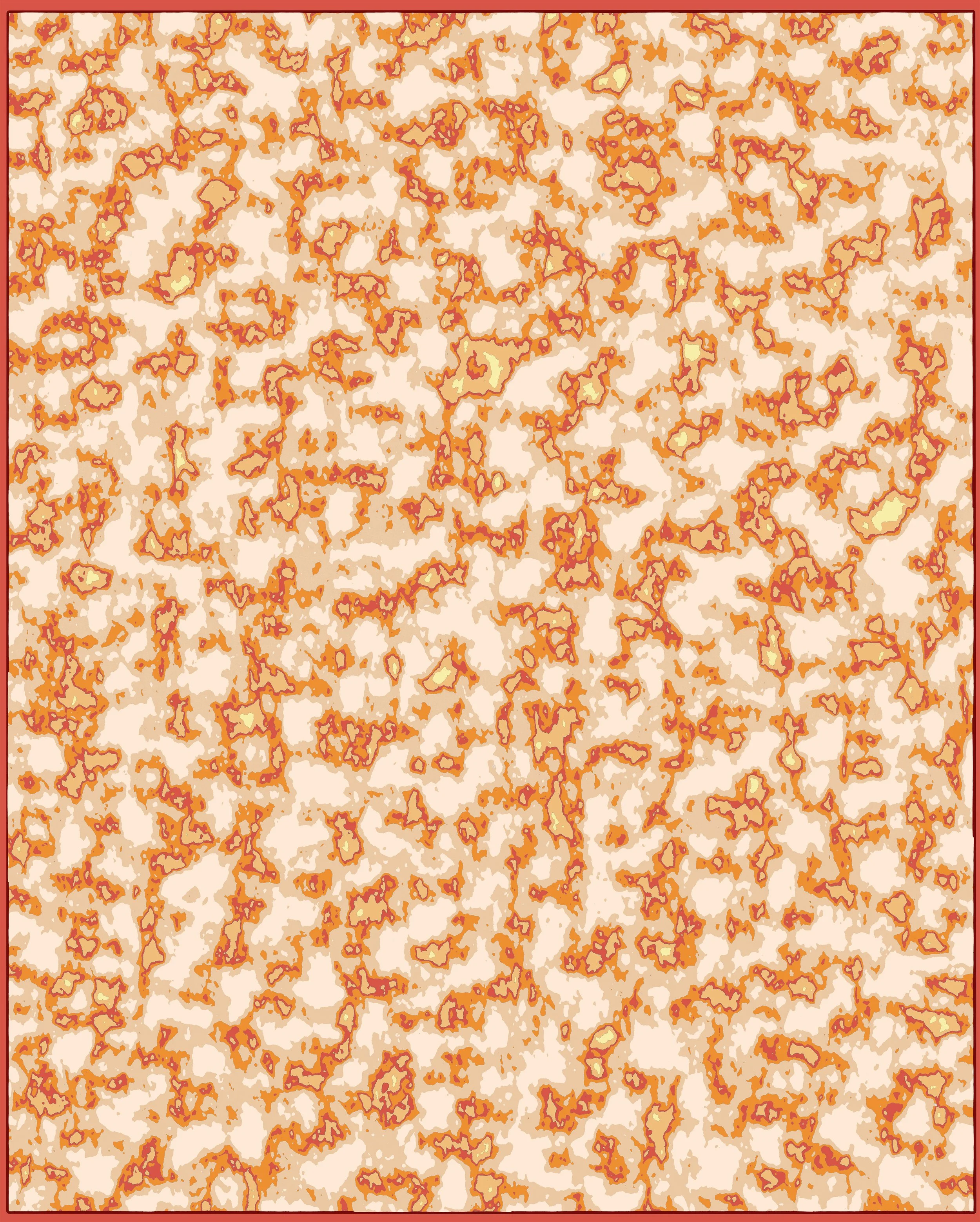
To provide different viewer-led opportunities, raw versions of the prepared scan data are left untouched in a sub-series called “Playgrounds”. Still, it is noticeable that necessary choices like orientation, hue, and value delimits the interpretive scope of a given shape; for example, a dark shape nested in a light blue one is more likely than any other combination to be seen as the silhouette of a flying bird.
My role in these artworks is always an intervention. Through selection, a field capable of sustaining many interpretations is collapsed into one.
The Theft of the Beholder’s Share
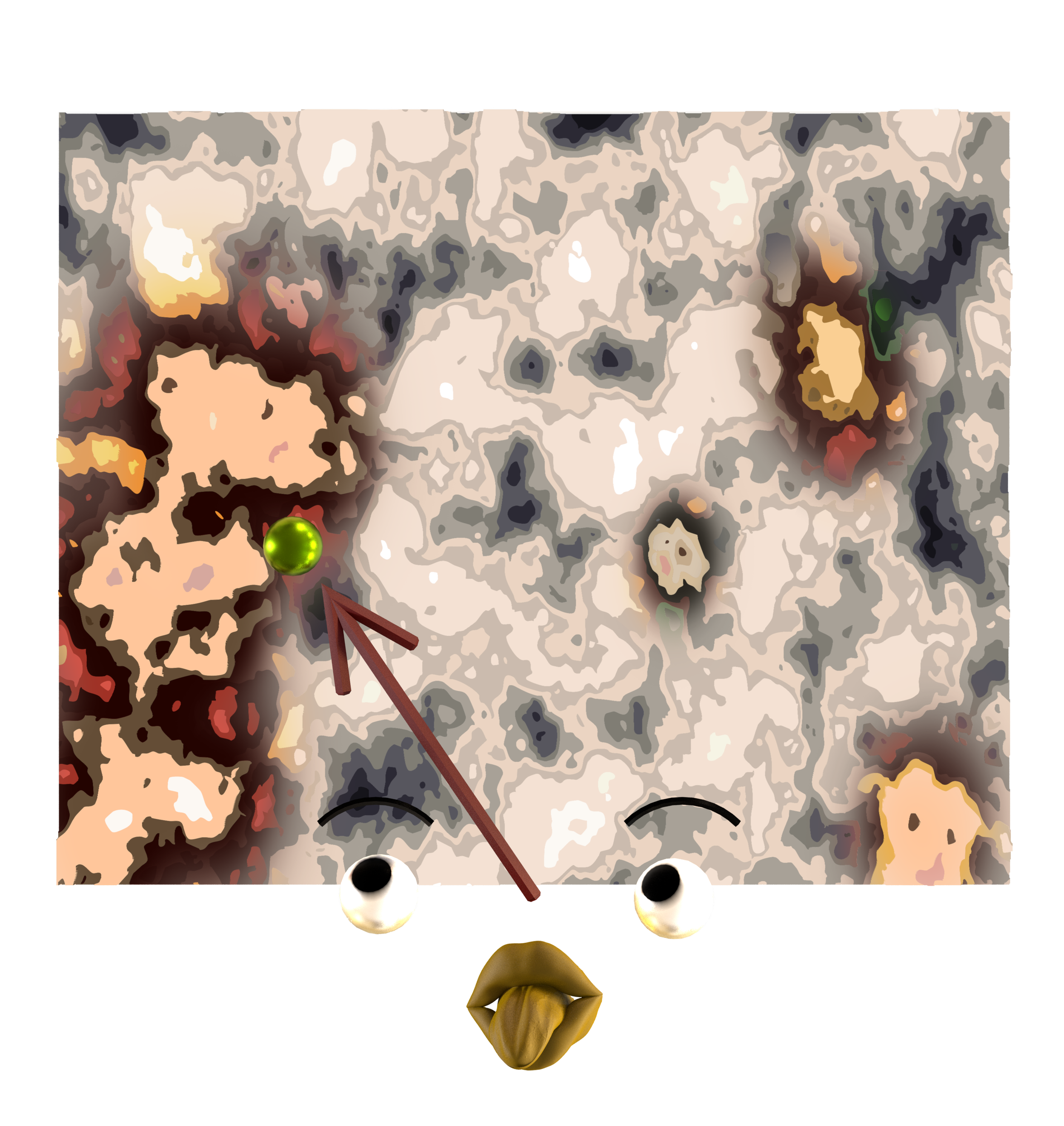
Thermo-chromic pigments are a marvel of contemporary material science. As they are warmed and cooled, these pigments alternate between solid colour to practically see-through. This affords a new opportunity for object making— without the need for screens or projectors, multiple images can be placed in the same location and switched back-and-forth.
A proposed variation of the “TEoP Paintings” is designed to use these pigments in order to elucidate the art historical argument of the series. The topographic relief is first machined of aluminum. The phenomenal interpretation (the fully realized image) is applied to the metal. Using the thermo-chromic pigments, a second opaque layer is applied depicting the original stimulus (the ambiguous collection of shapes). When the panel’s backside is exposed to heat, the painted faces and figures in the lower layer become visible.
Latent phenomena are ready to be discovered all over the sheet. So, instead of uniformly warming the panel, specific regions can be heated in a process mediated by an eye-tracker. When the viewer’s gaze lingers on a trigger zone, the heater corresponding to that area turns on, and when the surface reaches its threshold temperature, the hidden image is revealed. As the viewer carries out their own interpretations, they are continuously interrupted by the artist’s own perceptual completion.
The viewer takes on a passive role, witnessing a series of cognitive reenactments, as random stimulus materializes into face and form.
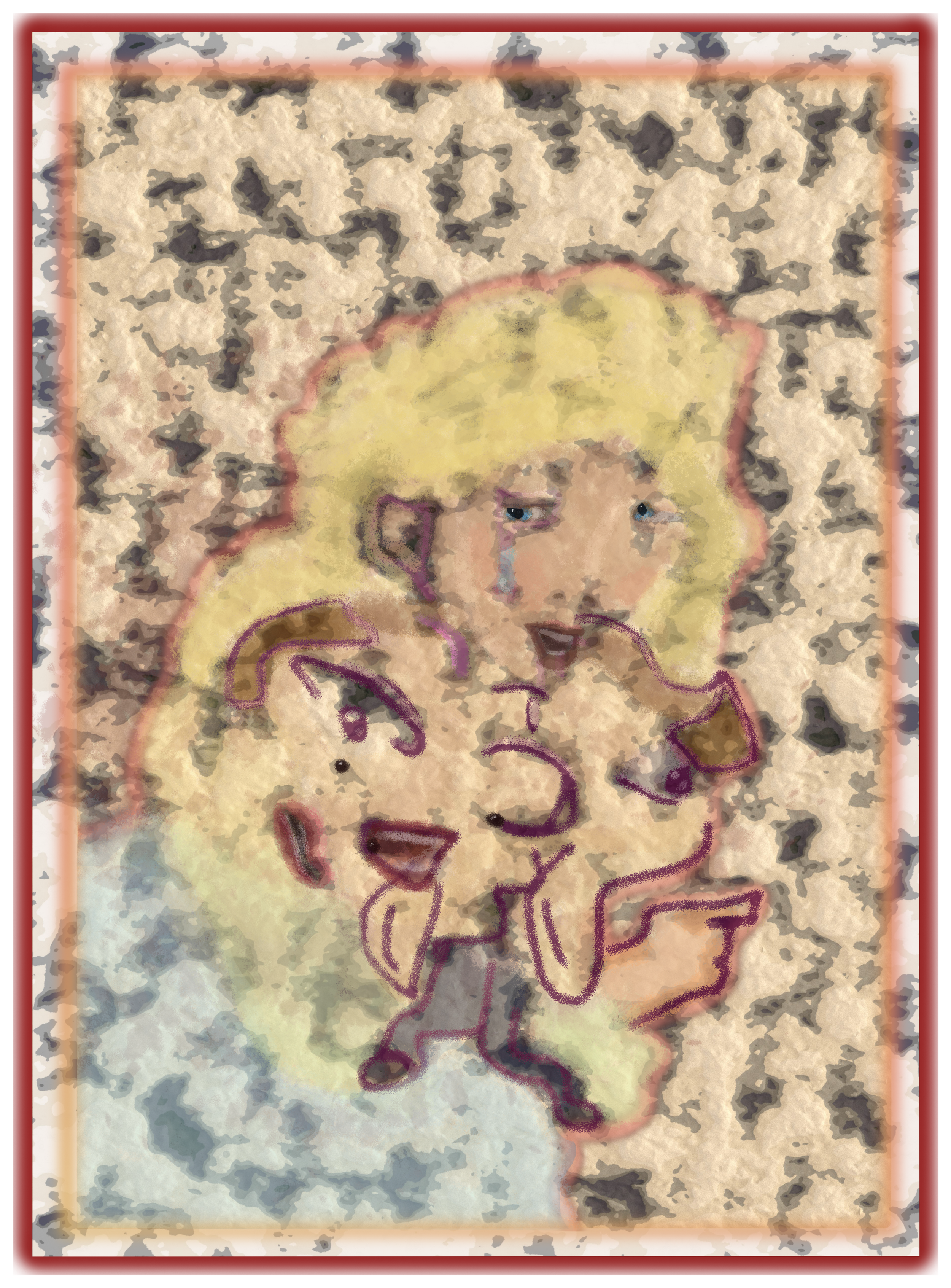
“Massacre of the Innocents” (left), and “Hope iii” (right); derived from paper scan data, and highlighted using the overpainting method.
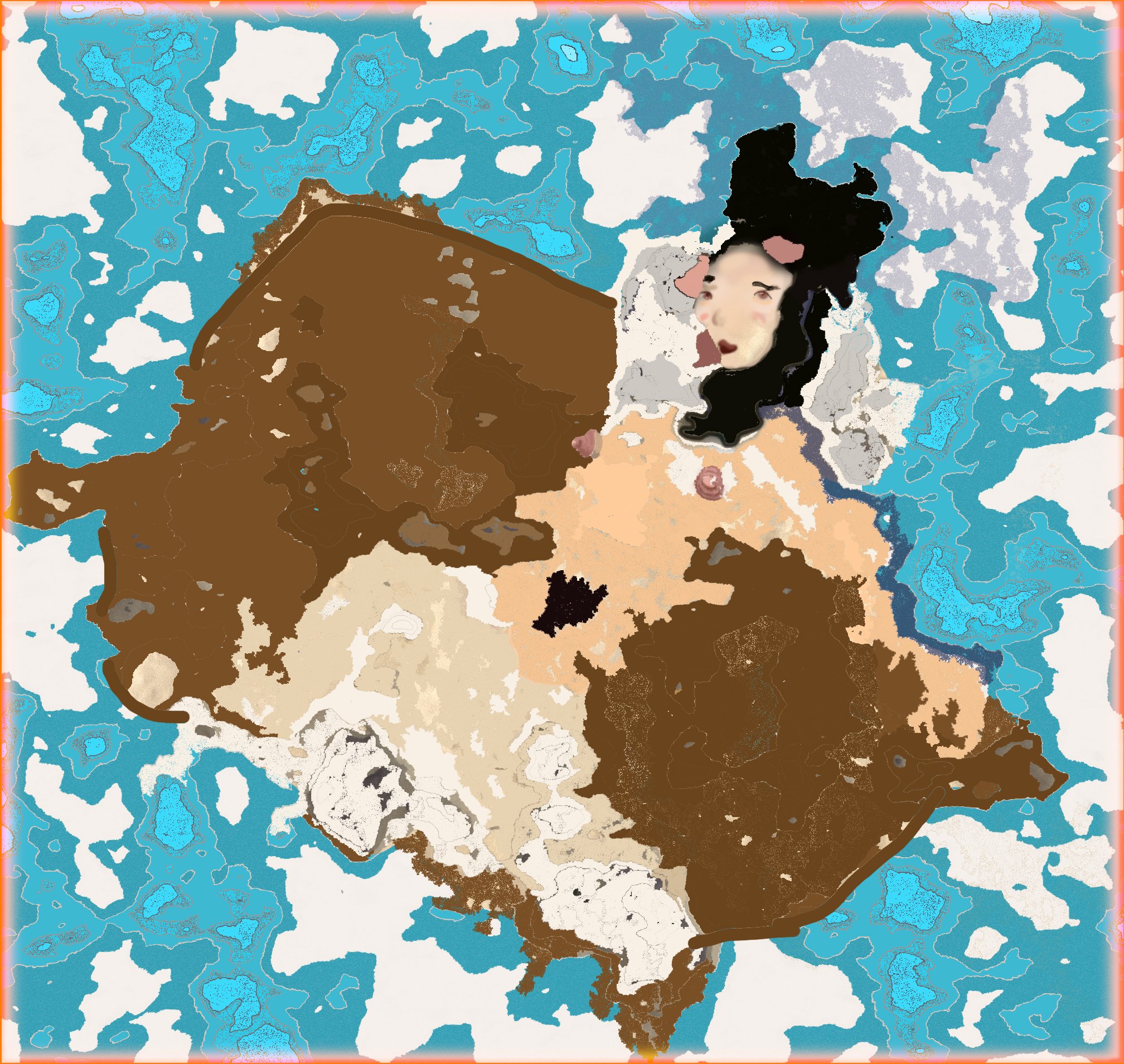
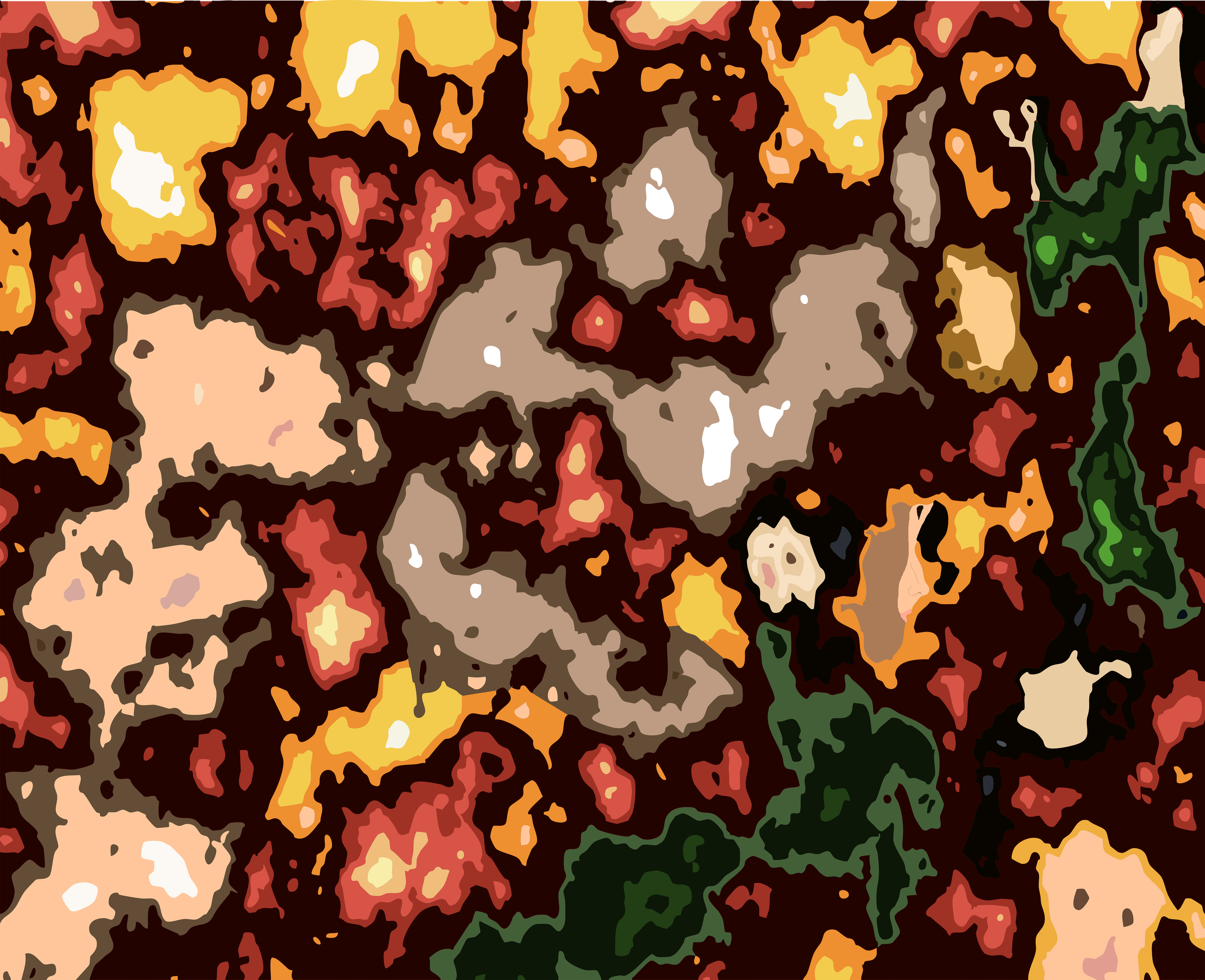
When viewed upright, Sheet Two presents “Cloudscape” (right); when the same crop of stimulus is turned -90deg, a new composition of Sheet Two, “Sloth” is revealed (left). Here, both compositions are highlighted using the strict colour-swap method.